
What does the main lift cylinder on a forklift do?
It provides the vertical force used to raise the mast or fork carriage. The cylinder must work with the truck’s mast geometry, mounting points and hydraulic circuit.

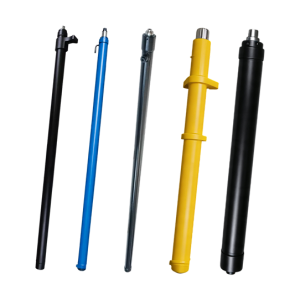
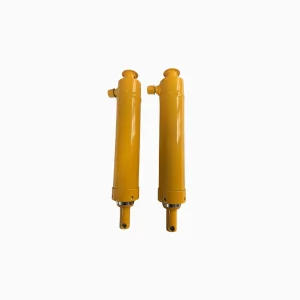
A forklift lift cylinder turns hydraulic input into the vertical movement used to raise the mast or fork carriage. On many trucks, the main lift cylinder is arranged as a single-acting cylinder, while the truck’s load and mast mechanism support the return movement. Confirm the actual circuit on your truck before specifying a replacement.
For an OEM project or replacement, we review the forklift hydraulic lift cylinder as part of the mast system. Your approved drawing or measured sample should define the working dimensions, mounts and port arrangement needed for fit and controlled travel.
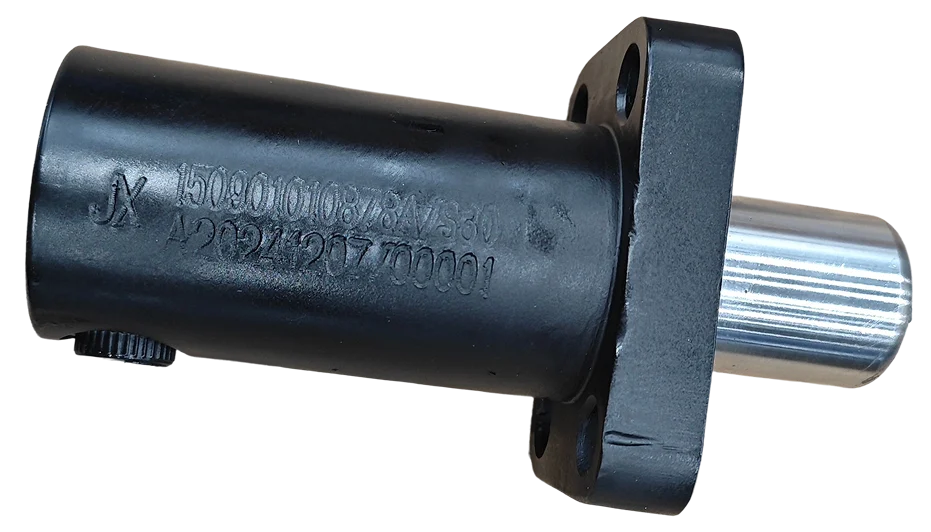
Do not select a lift cylinder by name or stroke alone. Send the complete interface and circuit information so we can review the configuration against your mast.
| Item | What to provide | Why it matters |
|---|---|---|
| Bore and rod | Approved drawing values or measured sample dimensions | Supports review of the required configuration and available installation space. |
| Stroke and overall lengths | Stroke plus closed and extended reference lengths | Defines mast travel and the cylinder’s fit through its full movement. |
| Mounting interfaces | Mount type, pin sizes, widths, centres and orientation | Allows the cylinder to be checked against the existing mast brackets and load path. |
| Ports and circuit | Port thread, position, hose clearance and circuit arrangement | Helps us review the hydraulic connections and installation orientation. |
| Truck and mast information | Truck model, mast layout, cylinder function, operating environment and quantity | Places the measured dimensions in the correct application context. |
Send the approved cylinder drawing and mast information. We will review bore, rod, stroke, overall lengths, mounts, ports and any cushioning requirement as one configuration.
If no drawing is available, provide clear photos and measured interfaces from the existing cylinder. We will identify the missing details that must be confirmed before quotation.
Check the mast brackets, pins, hose routing and available clearance as well as the cylinder. Worn or misaligned interfaces can affect fit and movement even when cylinder dimensions appear similar.
It provides the vertical force used to raise the mast or fork carriage. The cylinder must work with the truck’s mast geometry, mounting points and hydraulic circuit.
No. A single-acting arrangement is common for mast lifting, but circuit design varies. Confirm the original cylinder, hose connections and truck documentation before ordering.
Provide bore, rod diameter, stroke, closed and extended lengths, mount details, pin dimensions, port threads and positions, clear photos, and the forklift and mast model.
Your truck may also use a tilt cylinder, steering cylinder or forward cylinder. Browse the forklift hydraulic cylinder collection or the warehouse forklift application.