
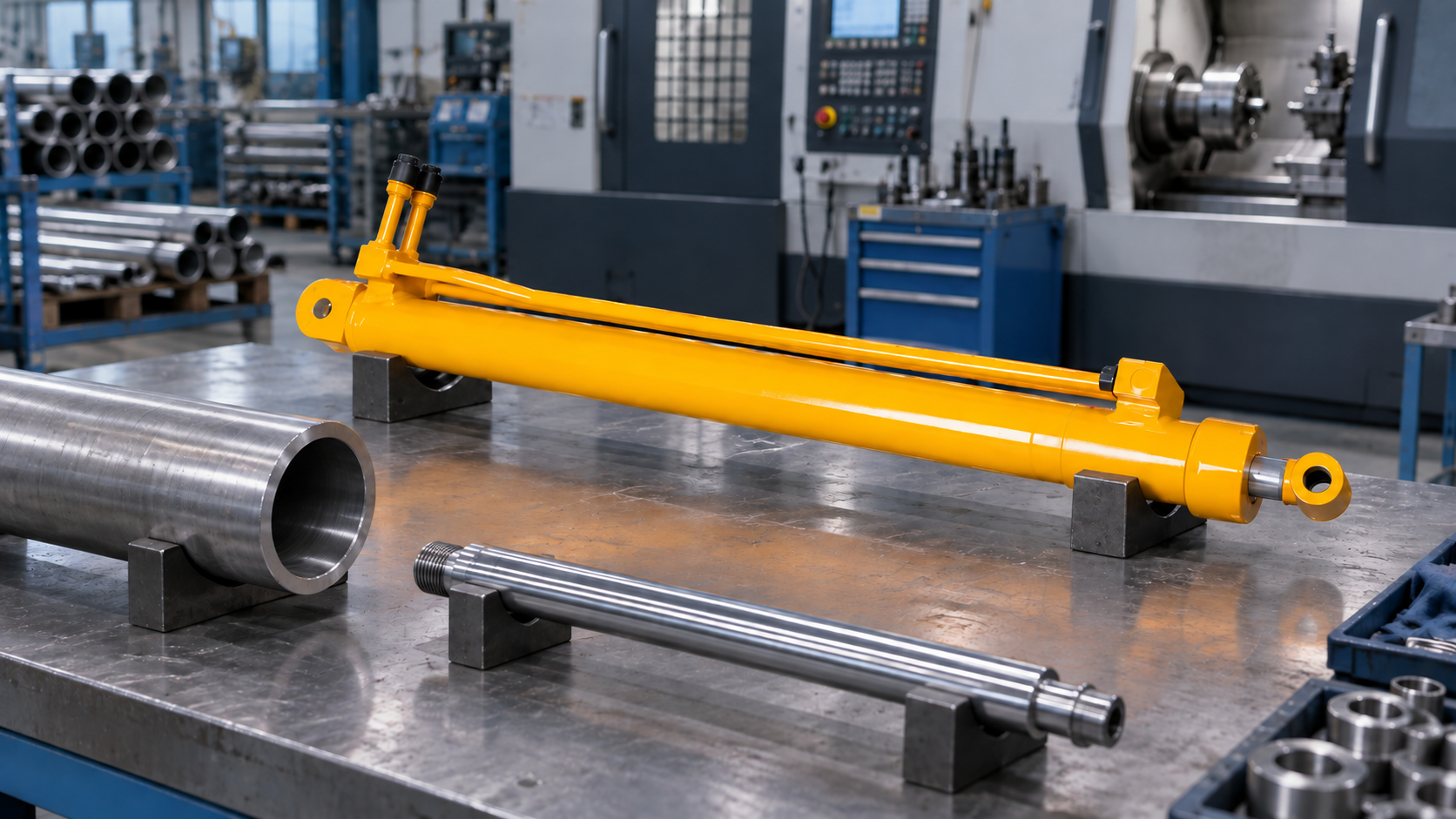
An excavator arm, a farm implement, and a factory press may all use hydraulic cylinders, but they do not need the same cylinder. Stroke, mounting points, working pressure, and operating conditions vary by machine. Before the barrel is cut or the rod is turned, those requirements have to be settled on the drawing.
In hydraulic cylinder manufacturing, that drawing guides material selection and the machining of each part. Then the body is joined, clean parts and seals are assembled, and the completed cylinder is run through its stroke and pressure-tested. We’ll take you through that work so you can see what goes into the cylinder you order.
Start Hydraulic Cylinder Manufacturing With the Drawing
Say your replacement cylinder passes a pressure test, but its hose port faces a frame rail. You still cannot install it. Before anyone cuts the tube, check the bore, rod diameter, stroke, closed length, pin centers, mount widths, and port direction against the machine. Working pressure, fluid, temperature, and exposure to dirt or water also belong in the specification because they affect the seals and rod finish.
If you have the old cylinder but no drawing, send photographs of both ends, the ports, and the installed position. Measure the mounting centers with the rod retracted and extended. Tell us if the old unit leaked at the rod, drifted under load, or bent. Those observations help define the custom hydraulic cylinder you actually need. An approved drawing gives machining and inspection the same set of dimensions to work from.
The material list follows the drawing. A barrel, rod, piston, gland, mounts, and seals must work together at the specified pressure and in the specified environment. Buying a stronger rod or a more expensive seal by itself does not fix a wrong fit.
How the Hydraulic Cylinder Barrel Is Machined
The barrel starts as tube stock. It is cut to length, and its ends, ports, and connection features are machined. The inner bore is then brought to the size and finish required by the drawing. Some builds start with a precision-honed tube; others need boring and honing as separate operations. For its horizontal outrigger cylinder, Jiangxin specifies a 20# steel precision-honed seamless barrel. Different cylinders may require different stock.
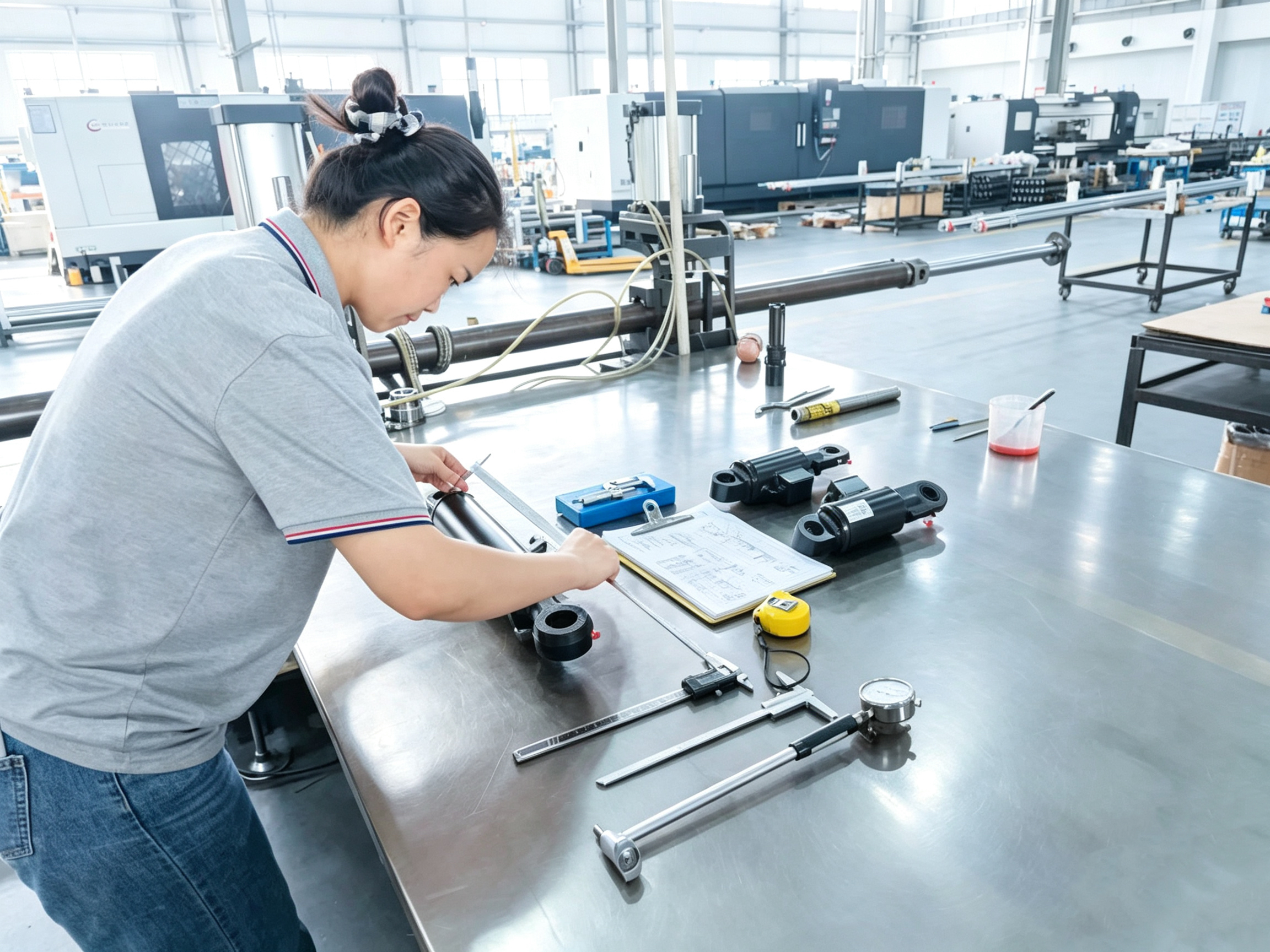
The inside surface is where the piston seal travels. If the bore is tight halfway along the stroke, the piston can drag even when the opening measures correctly. Diameter, roundness, and finish therefore need checking at the positions the drawing requires. Port edges must be free of burrs before a seal passes them during assembly.
This is also the point to ask about the build sequence. Welding can move a tube slightly. When a design calls for welding after a bore is finished, the bore condition needs checking after that heat is applied. A measurement taken only before welding cannot answer that question.
Machining the Hydraulic Cylinder Rod and Small Parts
The rod is machined for its piston connection and its external thread, clevis, or eye. Its sliding surface then needs the diameter, straightness, and finish specified for the gland and rod seal. On Jiangxin’s horizontal outrigger cylinder, the listed rod is 45# steel with standard hard-chrome plating; the product page also offers other surface treatments. If your cylinder works around salt spray or abrasive dust, call out that exposure on the drawing instead of assuming the standard finish will suffice.
Before assembly, inspect the area the seal will contact. A raised nick or coating defect may be small enough to miss in a quick glance, yet the seal will cross it on every stroke. Rod-end threads and pin holes deserve the same attention. They may not affect a bench pressure test but can stop the cylinder from fitting your machine.
The piston and gland need their own machining checks. Their grooves hold the seals and wear elements, and their machined faces close the pressure boundary. Check groove dimensions, edges, and mating surfaces against the selected seal set before cleaning the parts for assembly.
Welding the Hydraulic Cylinder Body
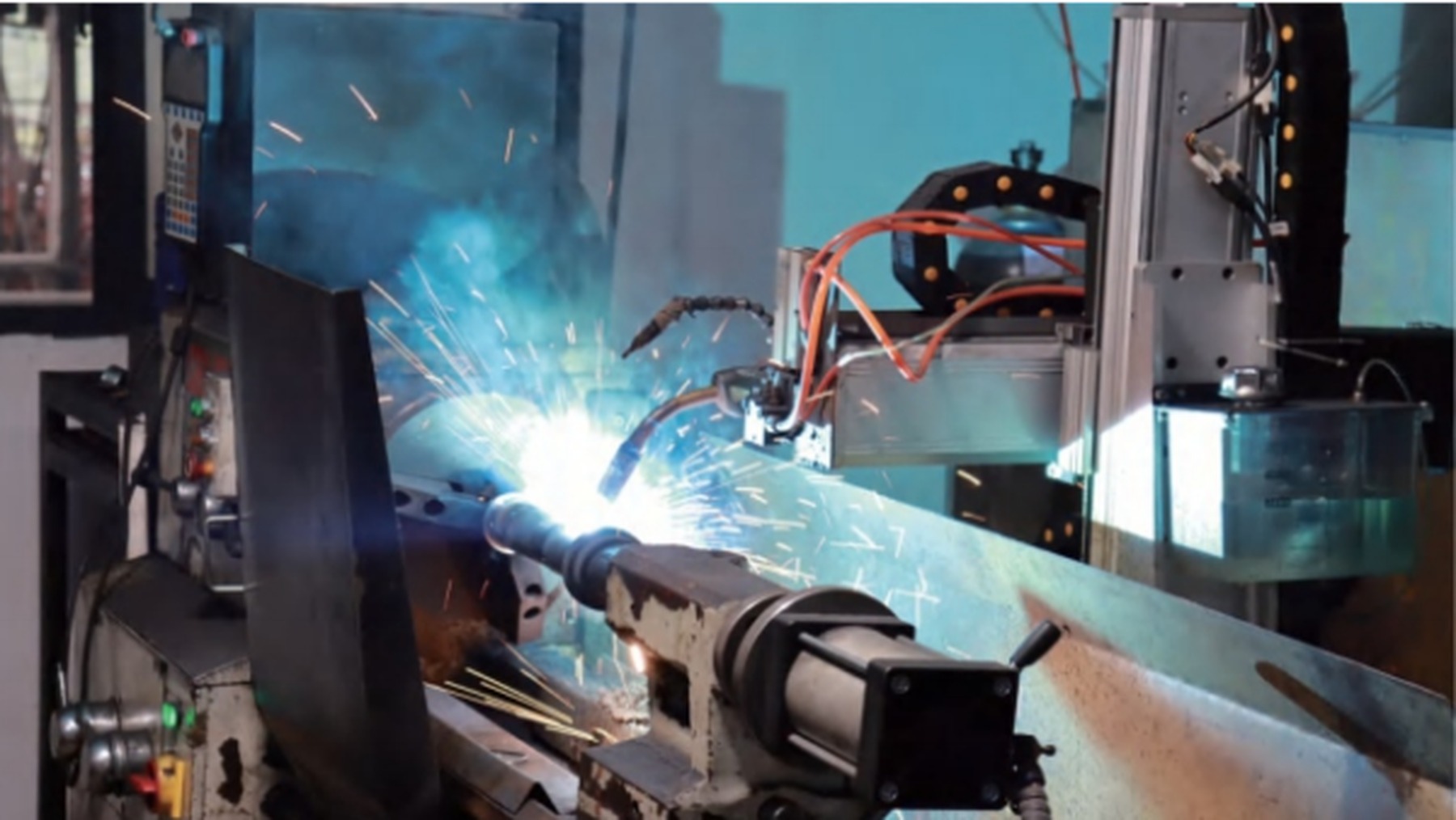
For a welded cylinder, the cap, ports, or mounting parts are located on the barrel and joined according to the drawing. The fixture must hold the mounting eyes and port direction where the finished cylinder needs them. A neat weld does not help if the pin bores end up out of line.
Jiangxin’s horizontal outrigger cylinder page identifies robotic welding for that model. In the workshop photo below, the part is held in a welding fixture while the joint is made. After joining, recheck the relevant mount dimensions, alignment, and bore condition. Some designs call for final bore work after welding; others protect a finished bore through the weld sequence.
Does a tie-rod cylinder skip this step?
A tie-rod design uses rods and end caps to clamp the barrel together instead of the same welded barrel-to-cap joint. Its parts still need accurate machining and alignment. The joining method changes, but the piston must still travel freely, and the assembled joints must still seal.
Clean Assembly for Hydraulic Cylinder Seals
Chips, abrasive residue, and welding debris must be removed before the piston goes into the barrel. A particle left behind can score the bore or cut a seal during the first few strokes. Clean parts are protected while the seals, wiper, and wear elements are fitted into their grooves.
The piston is secured to the rod, then the rod-and-piston assembly is guided into the barrel without dragging the seals across a sharp edge. The gland closes the rod end, and the remaining joints are completed for that construction. If a seal twists, a groove edge cuts it, or a rod gets scratched during insertion, good machining will not prevent a leak.
Before closing the body, check that the parts are clean and the seals sit in the correct grooves and orientation. Then move the rod through its travel and check for binding. Welded, threaded, and tie-rod bodies need different closing steps, but none can skip those basic checks.
How We Test a Finished Hydraulic Cylinder
We stroke the assembled cylinder through its specified travel. The test checks movement, end positions, and any cushioning or sensor features fitted to that unit. We then check pressure and leakage against the agreed drawing and test plan. A short clamping cylinder and a long-stroke construction cylinder should not be judged against an invented one-size-fits-all pressure figure.
ISO 10100:2020 specifies acceptance and function tests for hydraulic fluid-power cylinders. It provides a useful reference when the buyer and manufacturer agree on how to accept a unit. The order still needs its own rated pressure and any application-specific acceptance criteria.
If oil appears at a port or rod end, find the cause and retest the cylinder after correction. A wipe-down is not a passed test. Once the unit passes, cap the ports, protect the exposed rod, and identify the cylinder against the order. A damaged thread or scratched rod during shipping can undo the work done in the shop.
If you need a test record, dimensions, or material documents with a custom order, request them when you send us the drawing. Then everyone knows which checks and records belong to that cylinder before production starts.
Hydraulic Cylinder Manufacturing FAQs
Can welding change a finished cylinder bore?
Yes. Heat and restraint can move the tube enough to affect the bore. The required inspection point depends on the design and welding sequence, but a pre-weld bore measurement alone does not establish the finished condition.
What can make a new cylinder leak on its first test?
A cut or twisted seal, a nicked rod, a damaged bore, debris inside the barrel, or a leaking port joint can all cause it. Where the oil appears helps narrow the search. Repair and retest the cylinder, not just wipe it clean.
Do all cylinders need the same manufacturing steps?
No. A welded body needs joining and post-weld checks; a tie-rod body uses clamped end caps. Starting with honed tube also changes the barrel machining route. Both designs still need parts that fit, clean assembly, and a final test against their own specification.
What proof should I request after factory testing?
Ask for confirmation that the finished cylinder matches the approved drawing and has passed the agreed functional and pressure checks. If you need a recorded pressure result, measured dimensions, or material traceability, put those requirements on the order before the build begins.