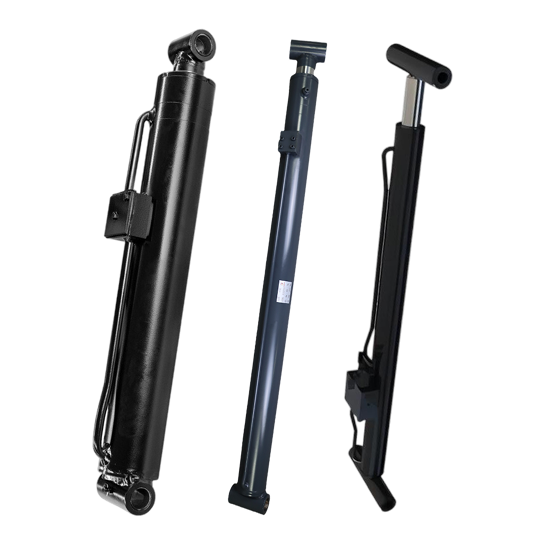
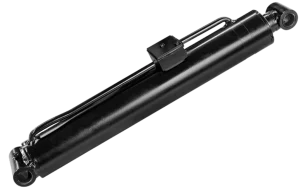



Can one cylinder design fit every aerial work platform?
No. A scissor lift, articulated boom and telescopic boom use different linkage geometry, reference lengths, load paths and circuits. Match the cylinder to the actual machine and function.

An aerial lift cylinder can raise a scissor stack, change boom angle, extend a telescopic section or position a platform, depending on the machine. Those functions place different demands on stroke, installed length, rod stability, mounting geometry and the hydraulic control circuit.
We review the cylinder together with your mechanism. Send the machine model, cylinder function, drawing and load information so we can check the interfaces that govern movement and fit before quotation.
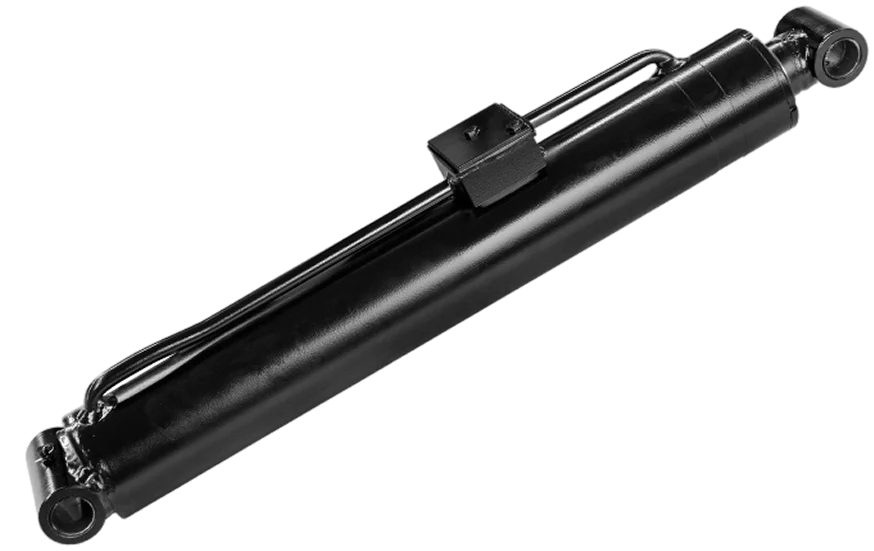
A matching outside diameter is not enough. We need the installed geometry and worst operating condition to review an aerial work platform lifting cylinder.
| Item | What you should provide | What it establishes |
|---|---|---|
| Machine and cylinder function | Platform type, machine model and whether the cylinder lifts, telescopes, luffs, levels or stabilizes | Separates cylinders that may look similar but act in different mechanisms and circuits. |
| Installed geometry | Stroke, closed and open pin-centre lengths, mounting orientation, available envelope and interference points | Defines the required travel and helps us check for bottoming, over-extension and installation conflicts. |
| Load through the linkage | Platform and payload data, pivot dimensions, operating angles, force direction and the worst load case | Provides the basis for reviewing bore, rod and buckling conditions through the full movement. |
| Mounting interfaces | Eye, clevis or trunnion details; pin diameters, widths, offsets, bearings and bracket dimensions | Allows both ends to be checked against the actual structure rather than a nominal product family. |
| Hydraulic circuit | Working pressure, port thread and position, hose clearance, fluid, valve-block interface and holding requirement | Confirms the connections and circuit information needed to review controlled movement and load holding. |
| Duty and environment | Cycle pattern, indoor or outdoor use, temperature, moisture, dust, salt exposure and storage position | Guides the review of seals, wipers, rod finish and external protection for your operating conditions. |
Share the platform linkage, cylinder drawing, force data and hydraulic schematic. We can review the cylinder envelope, reference lengths, mounts, ports and required operating position as one configuration.
If the approved drawing is unavailable, send the existing part number, clear installation photos and measurements from the removed cylinder. We will identify any missing interface or circuit details before quotation.
Inspect pins, bushings, brackets, hoses and adjacent structures as well as the cylinder. Wear or misalignment in the mechanism can side-load a replacement and change the intended platform movement.
No. A scissor lift, articulated boom and telescopic boom use different linkage geometry, reference lengths, load paths and circuits. Match the cylinder to the actual machine and function.
Provide stroke, closed and open pin-centre lengths, both mounting ends, pin sizes, body and rod diameters, port details, installed orientation and clear photos of the cylinder in the machine.
No. This page covers cylinders for aerial work platforms. A forklift lift cylinder raises a mast or carriage and has a different machine intent, geometry and selection path.
See our indoor and outdoor aerial work platform application or compare the aerial work platform hydraulic cylinder range. Send us the drawing when you need a configuration reviewed for a specific platform.