


Can the cylinder be selected from lift capacity alone?
No. Linkage geometry, cylinder angle, platform travel, load distribution, pressure and the required design margin all affect cylinder force.

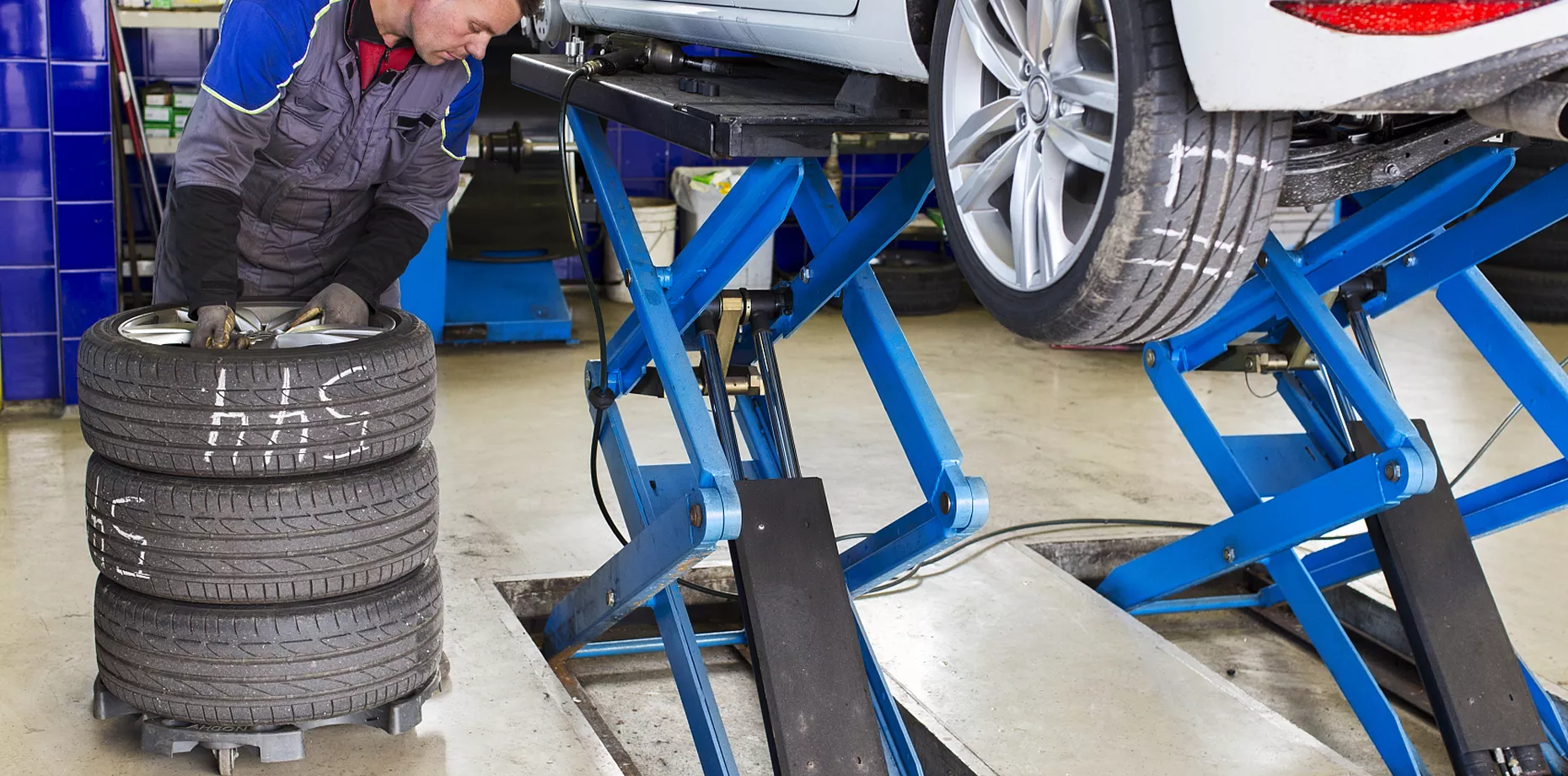
An automotive lift hydraulic cylinder raises and lowers a vehicle through a scissor, platform or linkage mechanism. Capacity alone does not define the cylinder. Confirm the lift geometry, load distribution, stroke, installed lengths, mounting points, hydraulic pressure and required synchronization before selecting a new or replacement unit.
Send the lift drawing and operating data so force, travel and interfaces can be checked together.
| Category | Requirements | Purpose |
|---|---|---|
| Lift type and capacity | Scissor, platform or other lift type, rated vehicle mass and load distribution | Defines the mechanism and working load case. |
| Geometry and travel | Pivot locations, cylinder angle, stroke, platform height range and closed/extended lengths | Relates platform movement to cylinder force and travel. |
| Mounting interfaces | Eye, clevis, trunnion or flange details, pin sizes, widths and alignment | Confirms fit and controls side loading. |
| Hydraulic circuit | Working and peak pressure, flow, port thread and orientation, valve arrangement and lowering method | Connects lifting force, speed and controlled descent to the circuit. |
| Duty and acceptance | Cycles per day, lift and lowering time, fluid, temperature and test requirements | Supports seal, surface and verification review. |
Provide the lift assembly drawing and hydraulic schematic rather than selecting from vehicle mass alone. We review mounting datums, linkage leverage, port clearance, hose movement and the required synchronization method. If pressure loss could create a hazard, identify the validated load-holding valves and mechanical locks required by the lift safety design.
No. Linkage geometry, cylinder angle, platform travel, load distribution, pressure and the required design margin all affect cylinder force.
Provide bore, rod diameter, stroke, retracted and extended reference lengths, mount and pin dimensions, port details and the available installation envelope.
Synchronization is a system issue involving load distribution, guides, flow control, sensors and the hydraulic circuit. Equal cylinder dimensions alone do not guarantee level travel.
Do not rely on cylinder seals alone. The lift design must define validated load-holding valves, mechanical locks and the permitted lowering or drift condition.